Showing posts with label Japanese culture. Show all posts

Tuesday, January 9, 2018

Arranging Japanese-styled Plate


I found some wonderful antique English plates at a local antique store. When I first saw these plates I thought that they would be perfect for my Japanese New Year’s celebration. The blue and white color combination reminds me of classic Japanese ceramics and the gold trim gives them an elegant touch. Every time I see these plates I think to myself, I don’t want to wait until New Years to use these. So I decided to use these plates to create a Japanese atmosphere plate for an everyday meal. I thought roast beef arranged Japanese style with a delicious Japanese influenced sauce and fresh greens would be perfect fit for my plates.


Well, what do you think? I would say mission accomplished! This plate has a Japanese atmosphere without being over the top. The key is the blue and white color on the plate, along with some red coloring from the decorative berries and the carved radish. Most of the decorative items such as the burlap ribbon, the pinecones, and the whole shell nuts are typical Western culture items so they are easy to find. The trick is to keep the colors simple and natural and they will all blend together. The crisp fresh watercress greens and decorative carved radish also add some Japanese influence to the plate. Of course you will need the recipe for my delicious Japanese style sauce, which I provided in the past. Pour the sauce to the side of the folded roast beef, so you can see the beautiful color of the mean. I think you will enjoy it.
Here is the link to my Japanese sauce recipe:Scallion and Ginger Sauce for Roast Beef


Have a wonderful holiday season!

Tuesday, December 5, 2017

Meyer Lemons as a Substitute for Yuzu


If you are familiar with Japanese food, I am pretty sure you have heard about the citrus called Yuzu. Yuzu has a very aromatic rind that wakens up the senses. We often use the rind to brighten up the flavor of our dishes and to enjoy the pleasant fragrance it brings. The yuzu juice has a fruity scent but the taste of the plump is rather tart and tangy, so it is sometimes used to add an acidic touch to meals. The most common ingredient using yuzu juice is ponzu. Ponzu is a delicious citrus-flavored soy sauce that has many uses. We can get ponzu at the Japanese or Asian supermarket or sometimes even at the local grocery store.


One day, I happened to come across Meyer lemons while grocery shopping and their fruity fragrance immediately reminded me of yuzu. It is a little less sour than yuzu but still fruitier than regular lemons. Since that day I have been using Meyer lemons as a yuzu substitute. Since we can’t get yuzu easily around here I have been recommending my cooking students to use Meyer lemons for yuzu as well. Meyer lemons are in season during the winter. But good news is that these days we see them at the supermarket all year round so it’s not too difficult to get them. Whenever you find yourself craving a dish with Yuzu, remember that you that you have access to a great substitute.


I’ll be introducing a delicious homemade ponzu recipe that uses Meyer lemons instead of yuzu. Stay tuned!

Tuesday, November 21, 2017

Holiday Gatherings: Japanese Influenced Cheese Plate


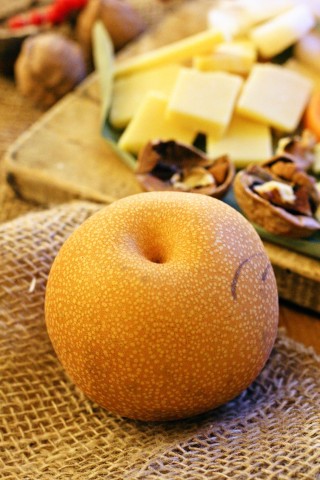
Don't forget to serve a nice cheese plate with wine for your holiday gatherings. I usually prepare 3 varieties of cheese, a blue cheese, a brie variety, and a harder variety. We should always pair some sweet fruits and jam with the cheese too. My cheese plate shown here blends some typical Japanese fruits such as Asian pear and Kaki (persimmon). The kaki fruit (persimmon) can be very sweet like a candy and Asian pear is sweet, crisp, and very juicy. Asian pear is best served before it gets too ripe, so don’t leave them for too long on the counter like regular pear. You can store them in the fridge.


Sometimes I even like to use Japanese rice crackers with the cheese plate. Brown rice crackers match best but any light salted type should be fine. Avoid the thick or soy sauce flavored ones.


There is one more Japanese item on this cheese plate. It is bamboo leaves! Lay the cheese and fruits directly onto the bamboo leaves. It adds a bit on Japanese styling and keeps the cheese from sticking to your plate or cutting board. This becomes a unique and interesting blend of Western and Japanese cultures for the holidays!
I included my favorite homemade fig jam. You can see the recipe here; Fig Jam for your Cheese Plate

Tuesday, October 24, 2017

Chic Japanese Table Setting for Halloween


Here comes one of the kid’s favorite time of the year, Halloween. So here is an idea: how about trying these chic Japanese Halloween table setting ideas to join in on the fun?
Using Japanese lanterns, mini pumpkins, black tablecloth, black napkins and black placemats gives this table a Japanese Halloween look. Japanese styled black trays were used for placemats here but any simple looking black placemats will do. My favorite part is using the Japanese lanterns for chopstick rests (hashioki). Aren’t they cool?

⭐︎Check out my blog about hashi-oki: Hashi-oki Collection (Chopstick Rest).


For the centerpiece, I placed orange and purple flowers in a black Japanese bowl made by one of my favorite Japanese ceramic artists. You don’t have to use a vase – just use anything black that looks creative. I use a flower pinholder to hold the flowers in place, but be careful as the flower pinholder is heavy and can chip your bowl.


You can carve out the mini pumpkins and place tea candles inside them to give your diner table even more of a Halloween atmosphere.


My suggestion is to keep the colors primarily black and orange, but you can add a splash of purple to give it a more sophisticated look. Try to use simple-looking items; otherwise, it might look a bit tacky.


I hope this makes you want to try something new for Halloween this year!

Tuesday, October 3, 2017

Hashi-oki Collection (Chopstick Rest)


Hashi-oki (ha-she-oh-key) are Japanese tableware used to keep the chopsticks tips from touching the table and to prevent the chopsticks from rolling. In my house, we use the Hashi-oki for every meal. Preparing the chopsticks and Hashi-oki is typically my kids’ job as we set the table. Thinking about which Hashi-oki to use is the fun part for them. Also understanding the season and showing it on the table is a very important part of Japanese food culture so selecting the correct Hashi-oki helps them to learn this.


I have quite a collection of Hashi-oki. Here are some of the highlights of my collection…


These Hashi-oki are for spring. The pink one is shaped and colored like the peddle of a cherry blossom. The green one is for “verdure season” which happens after the cherry blossoms are fully bloomed. Spring is just around the corner and I can’t wait to use these spring themed Hashi-oki.


These white and blue porcelain Hashi-oki are perfect for the summer. The colors look cool and refreshing, they take us away from the heat of summer.


These earthy heavy looking pottery Hashi-oki are best to use in the fall or winter.


These lemon Hashi-oki can be used both in the summer with lemonade or in winter with hotpot, since winter is the season for lemons and I use my homemade meyer lemon ponzu.


These small mallet shaped Hashi-oki is for bringing luck to our table so I usually use them for New Year’s.
For fall, I love to use these Japanese maple leaf shaped Hashi-oki.


And, real Japanese lantern


More of my collection.
From Kyoto, vegetable shaped Hashi-oki made from Bamboo


Pretty pastel colored bowtie Hashi-oki


Tomatoes and grapes


Kabocha squash


Lovely flower Hashi-oki, I think it is the dahlia flower


These Hashi-oki have a European look. It fits well with foreign dishes.


My favorite spring and summer Hashi-oki are shown in these two pictures. The flowers encased in glass are gorgeous. I love them a lot.


See if you can find a set of Hashi-oki at your Japanese, Asian market, or kitchen, dining, and homegoods store. Make it a point to try using your Hashi-oki the next time you eat a Japanese dish!


The process of putting your chopsticks on the Hashi-oki is said to slow down our eating and help us relax and enjoy our food. It might even help us eat less, at least this is what they say.